Digital Marketing Agency Canada That Delivers Results for Local Businesses
Digital Marketing Agency Canada: That Delivers Top Results for Local Businesses
Welcome to DivHit Solutions
Hey there! If you’re a local business in Canada looking to level up your online presence, you’ve landed in the right place. At DivHit Solutions, we’re not your average digital marketing agency, we’re your neighbour next door, rooting for your growth and success.

Digital Marketing Agency Canada
In a competitive market like Canada, local businesses need more than just basic online visibility; they need a digital marketing partner that understands their community, their audience, and what drives conversions in a Canadian context. Whether you run a home service business, retail shop, restaurant, clinic, or professional practice, choosing the right digital marketing agency in Canada can determine how fast you grow.
This guide breaks down what makes a results-driven agency stand out, the strategies that work best for local Canadian brands, and how to choose the partner that genuinely moves the needle for your business.
Why Local Businesses Need a Digital Marketing Agency Canada
Canadian consumers are highly digital, mobile-first, and research-driven.
A strong digital presence is no longer optional; it’s how customers discover, compare, and trust brands.
Here’s what Canadian businesses face:
- Growing competition online
- High cost-per-click on ads
- Rapidly changing platforms and algorithms
- The need for consistent, professional content
- Pressure to maintain SEO, social presence, and engagement
Hiring an agency that specializes in local Canadian markets helps businesses cut through the noise and reach the customers who matter.
What Makes a Results-Driven Digital Marketing Agency Stand Out?
Not all agencies are created equal. A results-focused digital marketing agency in Canada should offer:
1. Local SEO Expertise
Ranking locally is everything for small businesses.
A strong agency will optimize:
- Google Business Profile
- Local citations and directories
- Canadian map listings
- Location-based keywords
- Review generation strategies
This ensures your business appears when customers search:
✔ “near me.”
✔ “in Vancouver.”
✔ “in Toronto.”
✔ “local service company Canada.”
2. Paid Ads That Generate ROI
A powerful agency maximizes your budget using:
- Google Ads
- Facebook/Instagram Ads
- Local awareness campaigns
- Lead generation funnels
- Optimized retargeting
The focus: getting more leads for less cost.
3. Content That Speaks to the Canadian Audience
Your audience is diverse, multicultural, and detail-oriented.
A great agency knows how to create:
- Educational blogs
- Local community content
- Industry-specific guides
- Consistent social media posts
- Email newsletters and automated flows
Content builds trust, which drives conversions.
4. Brand Identity & Creative Strategy
A results-focused agency doesn’t just promote your brand—it helps shape it.
This includes:
- Brand messaging
- Visual identity
- Storytelling
- Customer journey mapping
- Funnels that drive action
Strong branding = higher conversions.
5. Transparent Data, Reporting & Real Accountability
Local businesses don’t want guesswork.
They want answers.
A reputable digital marketing agency provides:
- Monthly reports
- Real KPIs
- Tracking dashboards
- Clear insights
- Data-driven recommendations
You should always know where your money is going and what results you’re getting.
Top Digital Marketing Strategies for Local Businesses in Canada
Here are the approaches that consistently deliver results:
1. Google Business Profile Optimization
Your GBP listing is often your first impression.
A top agency will optimize:
- Business categories
- Service areas
- Reviews
- Photo uploads
- Weekly posts
- Q&A
- Offers
This directly improves local visibility.
2. Local SEO Blog Content
In Local SEO, Blogs help you rank for high-intent keywords such as:
- “best [service] in Vancouver.”
- “affordable [service] in Toronto.”
- “local [industry] expert near me”
This type of content pulls in ready-to-buy customers.
3. Paid Traffic + Retargeting
- A perfect combo for results:
- Paid traffic brings new leads
- Retargeting converts them
Most local customers need at least 2–5 touchpoints before buying.
4. High-Quality Social Media Presence
Canadian customers expect brands to be:
- Active
- Professional
- Engaging
A results-driven agency creates content that makes your business memorable.
5. Website Optimization & CRO
Your website must be:
- Fast
- Mobile-friendly
- Easy to navigate
- Built for conversions
A results-driven agency improves:
✔ landing pages
✔ calls-to-action
✔ loading speed
✔ user experience
✔ lead forms
How to Choose the Right Digital Marketing Agency in Canada
Look for these signs of credibility:
- Proven case studies
- Clear communication
- Data-backed decision making
- No locked-in long-term contracts
- Custom strategies (not templates)
- Transparent reporting
- Realistic promises
Avoid agencies that:
✘ Guarantee instant #1 rankings
✘ Hide data
✘ Overcharge for simple services
✘ Cannot explain their strategy
Why DivHit Solutions Stands Out as a Results-Driven Digital Marketing Agency in Canada
At DivHit Solutions, we combine:
- Deep industry knowledge
- Creativity
- Data-driven strategy
- A human-centred approach
- Local market understanding
We work with Canadian local businesses across:
- Fashion
- Education
- Home services
- Real estate
- Hospitality
- Retail
- Coaching & consulting
- Wellness & beauty
- Health services
Our focus is simple: we care about real results, not vanity metrics.
We help businesses:
✔ Increase leads
✔ Grow visibility
✔ Build a strong brand identity
✔ Improve SEO rankings
✔ Run profitable ad campaigns
✔ Strengthen customer trust
Every strategy is tailored.
Every client gets personal attention.
Every project receives strategic direction from the founder herself.
Final Thoughts
If you’re a local business owner, choosing the right digital marketing agency Canada can transform your visibility, revenue, and long-term growth. The digital landscape is competitive, but with the right partner, you can stand out and scale sustainably.
DivHit Solutions is built for businesses that want clarity, creativity, and measurable results.
Ready to Grow Your Business?
📩 Book a free consultation with your Digital Marketing Agency Canada
📞 Or contact us for a personalized growth plan
Let’s build something powerful together.
Why Custom Software Is Better Than Off-the-Shelf Softwares
Why Custom Software Is Better Than Off-the-Shelf Software
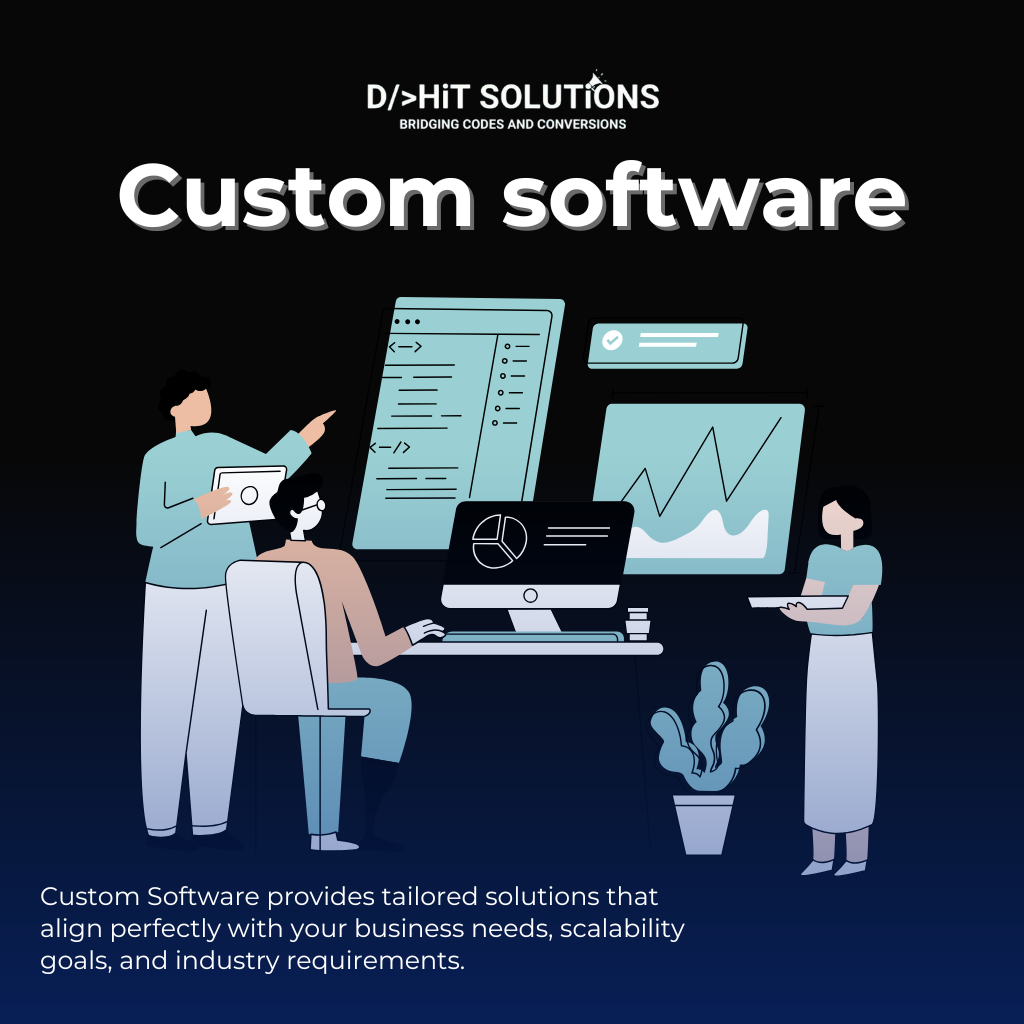
In today’s competitive digital landscape, businesses of all sizes are increasingly dependent on software solutions to optimize their operational workflows and enhance efficiency. focus on enhancing customer experiences to build a strong competitive advantage. While off-the-shelf software solutions are often marketed as cost-effective and ready-to-use, they come with limitations that can hinder long-term growth. On the other hand, custom software provides tailored solutions that align perfectly with your business needs, scalability goals, and industry requirements.
If you’re deciding between off-the-shelf and custom software, this article will help you understand why investing in the latter is often the more brilliant move for sustainable success.
1. What Is Custom Software?
Custom software is a solution designed specifically for your business requirements.In contrast to standard off-the-shelf solutions like CRMs, ERPs, or accounting software, custom software development entails creating applications that represent your specific processes, workflows, and goals for future growth.
For example, instead of forcing your team to adapt to pre-packaged software, you can create a CRM that matches your sales pipeline exactly or an automation tool that seamlessly integrates with your existing technological infrastructure.
👉 Learn more about how we help businesses with custom software solutions.
2. Key Benefits of Custom Software Over Off-the-Shelf
✔ Tailored to Your Business Needs
Every company has unique workflows. Off-the-shelf software forces you to adapt to predefined features, while custom software is built around your exact processes. This means fewer workarounds, less employee frustration, and higher efficiency.
Example: A logistics firm can build a custom tracking platform that integrates with IoT devices, while off-the-shelf tools may lack such flexibility.
✔ Scalability and Flexibility
As your company grows, your software needs change. Off-the-shelf products often lock you into rigid structures or costly upgrades. With custom software, scalability is built into the foundation—you can add modules, integrate with new tools, and evolve the platform as your business expands.
👉 Related: Cloud integration services can further enhance the flexibility of your custom applications.
✔ Competitive Advantage
Since off-the-shelf software is available to everyone, it rarely gives you an edge. Custom software development allows you to create unique features your competitors don’t have. This can directly impact customer satisfaction, retention, and even revenue growth.
✔ Better Security and Compliance
Generic software is often a bigger target for hackers because of its widespread use. With custom-built applications, you can implement tailored security protocols that protect sensitive data. You can also ensure compliance with industry regulations like HIPAA, GDPR, or PCI DSS.
For fintech and healthcare businesses, this is a significant advantage.
✔ Seamless Integration With Existing Systems
Most organizations use multiple tools—CRMs, ERPs, accounting software, and marketing platforms. Off-the-shelf products may not integrate smoothly with all of them. Custom software solutions are designed to integrate seamlessly with your existing ecosystem, ensuring smooth data flow and eliminating silos.
👉 See how our IT & Tech Support helps businesses manage complex integrations.
✔ Long-Term Cost Efficiency
While off-the-shelf software seems cheaper initially, ongoing licensing fees, user restrictions, and lack of flexibility can drive costs up in the long run. Custom software requires upfront investment, but it pays off by reducing recurring expenses and eliminating the need for multiple subscriptions.
3. Common Myths About Custom Software
❌ “It’s Too Expensive”
Yes, the initial investment is higher, but when you factor in scalability, security, and long-term savings, custom software often proves more cost-effective.
❌ “It Takes Too Long to Develop”
Modern frameworks, agile development, and cloud-native tools have drastically reduced development timelines. A minimum viable product (MVP) can be delivered quickly, with iterative improvements added later.
❌ “Off-the-Shelf Covers Everything”
No generic tool can fully address the complexities of a growing business. Eventually, companies outgrow one-size-fits-all solutions.
4. When Should You Choose Custom Software?
- If you’re a startup looking to scale and want technology that grows with you.
- If your industry has specific compliance requirements.
- If you want to differentiate from competitors with unique features.
- If integration with multiple tools is essential for your operations.
Real-World Example
Consider a Canadian cleaning company expanding its services. Off-the-shelf booking apps couldn’t handle multiple zones, service add-ons, and employee scheduling. A custom software solution automated booking, dispatch, invoicing, and customer notifications—resulting in reduced overhead and higher customer retention.
Final Thoughts
While off-the-shelf solutions may seem appealing in the short term, custom software provides long-term value, scalability, and competitive advantages. Businesses that invest in tailored technology position themselves for growth, efficiency, and innovation.
If you’re considering a digital transformation, start with a partner who understands both your business goals and technical needs.
👉 Ready to explore your options? Visit our Custom Software Solutions page and schedule a free consultation today.
SEO for Small Businesses in Canada: 7 Actionable Tips to Rank Locally
SEO for Small Businesses in Canada: 7 Actionable Tips to Rank Locally
Small businesses in Canada face intense competition online, particularly when trying to differentiate themselves in their local markets. Whether you’re a local service provider, a retail store, or a niche startup, effective local SEO (Search Engine Optimization) can help you appear higher on Google, attract nearby customers, and grow your brand organically.
At DivHit Solutions, we’ve helped Canadian businesses boost their visibility through practical, budget-conscious strategies. In this guide, we’ll share seven actionable SEO tips to help your business rank locally.
Why SEO for Small Businesses Matters in Canada
Search Engine Optimization (SEO) is the process of optimizing your website and online presence to enhance your visibility on search engines, such as Google. For small businesses in Canada, SEO is especially important because:
- 89% of consumers use search engines to find local businesses
- Higher search rankings mean more clicks, traffic, and leads
- SEO is cost-effective compared to paid ads over time
- Local SEO helps you compete with larger companies by targeting nearby customers
1. Optimize Your Google Business Profile
Your Google Business Profile (GBP) is your digital storefront. It influences how you appear in Google Maps and local search results.
Action Steps:
- Claim and verify your listing
- Add accurate business hours, contact info, and website link
- Upload high-quality photos of your business, team, or products
- Use relevant local keywords in your business description
- Encourage customers to leave reviews, and respond to them
Expected Outcome:
With a fully optimized GBP, you can expect increased visibility in Google Maps and local search, which often leads to more walk-in traffic, phone calls, and customer trust—especially for service-area businesses.
2. Use Local Keywords in Strategic Places
Think like your customers: What would they search for to find you? Use those phrases on your website.
Action Steps:
- Research local keywords with tools like Google Keyword Planner or Ubersuggest
- Add city- or province-specific terms to your content
- Include them in:
- Page titles
- Meta descriptions
- Headers (H1, H2)
- Body content
- Image ALT tags
Expected Outcome:
Using local keywords helps your site appear in relevant local searches, increasing qualified traffic to your website and attracting users who are actively looking for your product or service in their area.
3. Create Location-Based Landing Pages
If you serve multiple cities or regions, create separate pages for each one.
What to include:
- Unique content about services in that area
- Testimonials or case studies from local clients
- Localized calls-to-action
Expected Outcome:
Location-specific landing pages help search engines understand which areas you serve, allowing you to rank for “near me” or geo-targeted searches. This leads to more leads from multiple regions without needing multiple websites.
4. Build Local Citations & Listings
Citations are online mentions of your business (name, address, phone number) on directories. These validate your existence to Google and help boost your local rankings.
Must-have Canadian directories:
- Yelp.ca
- YellowPages.ca
- 411.ca
- Cylex-Canada.ca
- ProfileCanada.com
Pro Tip:
Ensure NAP (Name, Address, Phone) consistency across all listings.
Expected Outcome:
Accurate and consistent citations improve your credibility with search engines, strengthen your local SEO profile, and increase your chances of appearing in the top 3 local results (the map pack).
5. Earn Reviews & Respond Promptly
Google considers reviews as a trust signal for local SEO. Businesses with consistent, high-quality reviews often rank higher in the local pack.
How to get more reviews:
- Send a follow-up email after service with your review link
- Display QR codes on receipts, business cards, or counters
- Ask loyal customers to leave feedback and thank them personally
Expected Outcome:
More positive reviews not only boost your visibility in search results but also increase the likelihood of a potential customer choosing you over a competitor due to trust and social proof.
6. Improve Mobile Page Speed & UX
Most local searches happen on mobile. A slow site = lost business.
Quick fixes:
- Use a mobile-responsive design
- Compress images
- Avoid popups that block important content
- Use PageSpeed Insights to identify issues
Expected Outcome:
Faster load times improve user experience, reduce bounce rates, and improve your chances of ranking higher in mobile search, especially important for location-based, time-sensitive services.
7. Add Structured Data (Schema Markup)
Structured data helps Google understand your business details more clearly and enhances your search appearance (like rich snippets).
Types to implement:
- Local Business schema
- Review schema
- FAQ schema
Tools to use:
- Merkle Schema Generator
- RankMath or Yoast
Expected Outcome:
By implementing schema, your business can appear with enhanced listings—such as star ratings, opening hours, and service information—making your result more attractive and clickable in search.
Final Thoughts
Local SEO isn’t just about ranking—it’s about being found by the people who matter most: your nearby customers. With these 7 tips, your small business in Canada can start building long-term visibility, trust, and leads.
By implementing just a few of these strategies—starting with Google Business Profile optimization and local keywords—you can outperform competitors who haven’t yet invested in SEO.
Need Help with Local SEO?
At DivHit Solutions, we specialize in digital marketing services tailored for small businesses in Canada. From SEO audits to local landing page creation and ongoing optimization—we do it all.
👉 Contact us now for a free SEO audit and let’s boost your local visibility.
Related Services: Digital Marketing Services | Web Development Services
Unlocking Success: Why Choosing the Right PPC Agency in Vancouver Can Transform Your Business
Why Choosing the Right PPC Agency in Vancouver Can Transform Your Business
In today’s fast-paced digital landscape, harnessing the power of pay-per-click (PPC) advertising can be a game-changer for businesses seeking rapid growth. However, the path to success is paved with critical decisions, and perhaps the most significant one is selecting the right PPC agency in Vancouver. With the right partner by your side, your ads can soar above the competition, delivering targeted traffic and exceptional return on investment. But what makes a PPC agency the right fit? From data-driven strategies to creative ad campaigns, the nuances of a well-executed PPC plan can transform your brand’s online presence and profitability. As we explore the crucial factors in choosing the ideal PPC agency, you’ll discover how this decision can propel your business to new heights, unlocking untapped potential and driving measurable results. Let’s dive in and unveil the secret to making your PPC campaigns truly flourish!
Understanding PPC Advertising
Pay-per-click (PPC) advertising has revolutionized the way businesses reach their target audience in the digital age. Unlike traditional advertising methods, PPC allows businesses to display their ads to users actively searching for related products or services. This targeted approach ensures that your marketing budget is spent efficiently, reaching those most likely to convert. The beauty of PPC lies in its structure—you only pay when someone clicks on your ad. This cost-effective model can yield significant returns if managed correctly.
PPC platforms like Google Ads and Bing Ads provide businesses with a plethora of tools to create, manage, and optimize their campaigns. These platforms offer detailed analytics, enabling marketers to track performance in real-time and make data-driven decisions. The flexibility of PPC campaigns also allows for quick adjustments, whether it’s tweaking ad copy, adjusting bids, or refining targeting criteria. This agility is crucial in an ever-changing market landscape, where consumer behavior can shift rapidly.
Moreover, PPC advertising is not limited to search engines. Social media platforms such as Facebook, Instagram, and LinkedIn also offer PPC options, allowing businesses to tap into specific demographic groups. By leveraging these platforms, companies can create highly personalized ad experiences that resonate with their audience. The combination of precision targeting, real-time analytics, and versatile platforms makes PPC advertising a powerful tool for businesses aiming to enhance their online presence and drive meaningful results.

The Importance of Choosing the Right PPC Agency
Choosing the right PPC agency is paramount to the success of your campaigns. A proficient agency brings a wealth of experience and expertise, which can significantly impact your return on investment (ROI). The right agency will not only understand the intricacies of PPC advertising but also tailor strategies to align with your business goals. This bespoke approach ensures that every dollar spent contributes to achieving your objectives, whether it’s increasing website traffic, generating leads, or boosting sales.
A reputable PPC agency in Vancouver will have a deep understanding of the local market dynamics. This local expertise can be a game-changer, as it allows the agency to craft campaigns that resonate with the regional audience. They can leverage local trends, preferences, and behaviors to create ads that capture attention and drive engagement. Additionally, a local agency will have established relationships with regional industry players, potentially opening doors to collaborative opportunities and partnerships.
Furthermore, the right PPC agency acts as an extension of your team, providing ongoing support and insights. They will continuously monitor and optimize your campaigns, ensuring they remain effective and relevant. This proactive approach helps in identifying and addressing potential issues before they escalate, thereby maximizing the impact of your advertising efforts. With the right agency by your side, you can focus on your core business activities, confident that your PPC campaigns are in capable hands.
Key Factors to Consider When Selecting a PPC Agency
When selecting a PPC agency, several key factors should guide your decision-making process. Firstly, experience and expertise are critical. Look for agencies with a proven track record of success in managing PPC campaigns for businesses similar to yours. Case studies, client testimonials, and industry awards can provide valuable insights into an agency’s capabilities and reliability. An agency with a diverse portfolio demonstrates its ability to adapt to different industries and deliver consistent results.
Secondly, transparency and communication are vital. A reliable PPC agency will maintain open lines of communication, providing regular updates and detailed reports on campaign performance. They should be willing to explain their strategies, answer your questions, and involve you in the decision-making process. Transparency builds trust and ensures that you are always informed about where your budget is being allocated and the outcomes being achieved.
Lastly, consider the range of services offered by the agency. A comprehensive PPC agency will provide end-to-end solutions, from initial strategy development to ongoing optimization and reporting. They should be proficient in various PPC platforms, including search engines and social media, to offer a holistic approach to your advertising needs. Additionally, look for agencies that incorporate advanced tools and technologies, such as AI-driven analytics and automation, to enhance the efficiency and effectiveness of your campaigns.
How a PPC Agency Can Boost Your Business Growth
A proficient PPC agency can significantly boost your business growth by driving targeted traffic to your website and increasing conversions. By leveraging their expertise, PPC agencies can identify the most effective keywords and bidding strategies to ensure your ads appear to the right audience at the right time. This precision targeting minimizes wasted ad spend and maximizes the likelihood of reaching potential customers who are ready to take action.
Moreover, a PPC agency’s creative team can craft compelling ad copy and visually appealing creatives that capture attention and inspire engagement. The right messaging and visuals can make a substantial difference in how your ads are perceived, ultimately influencing click-through rates and conversion rates. By continuously testing and refining these elements, the agency ensures that your ads remain fresh, relevant, and effective.
Additionally, PPC agencies bring a wealth of analytical tools and methodologies to the table. They can track and measure every aspect of your campaign’s performance, from impressions and clicks to conversions and ROI. This data-driven approach allows for continuous optimization, ensuring that your campaigns are always performing at their best. By identifying what works and what doesn’t, the agency can make informed adjustments that drive better results and contribute to sustainable business growth.
The Role of Data and Analytics in PPC Campaigns
Data and analytics play a pivotal role in the success of PPC campaigns. They provide valuable insights into how your ads are performing and where improvements can be made. Through detailed analytics, PPC agencies can track a wide range of metrics, including click-through rates (CTR), conversion rates, cost per click (CPC), and return on ad spend (ROAS). These metrics offer a clear picture of your campaign’s effectiveness and highlight areas that require attention.
Advanced analytics tools also enable PPC agencies to segment your audience and tailor campaigns to specific demographic groups. By understanding the preferences and behaviors of different audience segments, the agency can create personalized ad experiences that resonate more deeply with potential customers. This level of customization enhances the relevance of your ads, leading to higher engagement and conversion rates.
Furthermore, data and analytics allow for real-time optimization of PPC campaigns. Agencies can monitor performance on an ongoing basis and make immediate adjustments to improve results. Whether it’s reallocating budget to high-performing keywords, tweaking ad copy, or adjusting targeting criteria, these real-time optimizations ensure that your campaigns remain agile and responsive to market changes. This proactive approach maximizes the impact of your advertising efforts and drives better overall outcomes.
Common Mistakes to Avoid When Working with a PPC Agency
While working with a PPC agency can yield significant benefits, it’s essential to avoid common mistakes that can hinder your campaign’s success. One common mistake is setting unclear or unrealistic expectations. Ensure that both you and the agency have a clear understanding of your goals, budget, and timelines. Unrealistic expectations can lead to disappointment and frustration, whereas clear, achievable goals set the foundation for a successful partnership.
Another mistake to avoid is neglecting the importance of communication. Regular communication with your PPC agency is crucial to ensure that your campaigns are on track and aligned with your business objectives. Schedule regular check-ins and performance reviews to discuss progress, address any concerns, and make necessary adjustments. A lack of communication can result in misaligned strategies and missed opportunities.
Lastly, avoid micromanaging the agency. While it’s important to stay informed and involved, micromanaging can stifle the agency’s creativity and expertise. Trust the agency to do what they do best and provide them with the flexibility to make data-driven decisions. Instead of focusing on every minor detail, concentrate on the overall strategy and the results being achieved. This balanced approach fosters a collaborative environment where the agency can thrive and deliver exceptional outcomes for your business.
Success Stories: Businesses Transformed by PPC in Vancouver
Several businesses in Vancouver have experienced remarkable transformations through effective PPC campaigns. One such success story is that of a local e-commerce retailer struggling to gain traction in a competitive market. By partnering with a skilled PPC agency, the retailer implemented targeted ad campaigns that highlighted their unique selling points. Within months, their website traffic surged, and sales increased by 150%. The agency’s expertise in keyword selection, ad copywriting, and bid management played a crucial role in this turnaround.
Another notable example is a Vancouver-based tech startup that sought to increase brand awareness and generate leads. The PPC agency they collaborated with developed a comprehensive strategy that included search ads, display ads, and social media advertising. The multi-channel approach ensured maximum visibility and engagement. As a result, the startup saw a 200% increase in lead generation and successfully established its presence in the tech community.
A third success story involves a local service provider in the healthcare industry. Faced with the challenge of reaching a specific demographic, the service provider turned to a PPC agency for assistance. The agency conducted thorough market research and crafted ads that resonated with the target audience. The campaigns were meticulously monitored and optimized, leading to a significant increase in appointment bookings and patient inquiries. The healthcare provider’s growth was directly attributed to the strategic efforts of the PPC agency.
Evaluating the ROI of Your PPC Campaigns
Evaluating the return on investment (ROI) of your PPC campaigns is essential to understand their effectiveness and justify your advertising spend. To calculate ROI, compare the revenue generated from your PPC campaigns to the total cost of the campaigns, including ad spend, agency fees, and any additional expenses. A positive ROI indicates that your campaigns are generating more revenue than they cost, while a negative ROI suggests the need for adjustments.
However, evaluating ROI goes beyond simple calculations. It’s important to consider the long-term impact of your PPC campaigns. For instance, PPC can drive brand awareness, which may not result in immediate conversions but contributes to future sales. Similarly, PPC campaigns can help build a loyal customer base, leading to repeat purchases and increased customer lifetime value. These indirect benefits are crucial components of your overall ROI.
To gain a comprehensive understanding of your PPC campaign’s ROI, leverage advanced analytics tools that provide detailed insights into performance metrics. Track key indicators such as conversion rates, cost per acquisition (CPA), and customer journey paths. These metrics offer a holistic view of your campaign’s impact and highlight areas for improvement. By continuously evaluating and refining your PPC strategies, you can maximize ROI and ensure the long-term success of your advertising efforts.
Questions to Ask Before Hiring a PPC Agency
Before hiring a PPC agency, it’s essential to ask the right questions to ensure they are the right fit for your business. Start by inquiring about their experience and expertise. Ask for case studies, client testimonials, and examples of successful campaigns they have managed. Understanding their track record will give you confidence in their ability to deliver results.
Next, inquire about their approach to strategy and execution. Ask how they plan to align their PPC strategies with your business goals and what methodologies they use for keyword research, ad creation, and bid management. Understanding their process will help you gauge their level of expertise and ensure that their approach aligns with your expectations.
Finally, discuss communication and reporting. Ask how often you can expect updates on campaign performance and what metrics will be included in their reports. Clear and transparent communication is vital for a successful partnership, so ensure that the agency is committed to keeping you informed and involved throughout the campaign. By asking these questions, you can make an informed decision and choose a PPC agency that will drive meaningful results for your business.
Making the Right Choice for Your Business
Choosing the right PPC agency in Vancouver is a critical decision that can transform your business. The right agency will bring expertise, creativity, and data-driven strategies that elevate your PPC campaigns and drive significant growth. By considering key factors such as experience, communication, and range of services, you can select an agency that aligns with your business goals and delivers exceptional results.
A proficient PPC agency will leverage data and analytics to optimize your campaigns continuously, ensuring that every dollar spent contributes to achieving your objectives. They will avoid common pitfalls, foster a collaborative partnership, and provide ongoing support and insights. With their expertise, your business can unlock untapped potential, reach new heights, and achieve sustainable success.
In the fast-paced digital landscape, PPC advertising is a powerful tool for businesses seeking rapid growth. By making the right choice and partnering with a skilled PPC agency, you can harness this power to transform your brand’s online presence and profitability. Invest in the right agency, and watch as your PPC campaigns flourish, driving measurable results and propelling your business to new heights.
Learn more about our Marketing Services.
Why in 2025 Small Businesses Need a Digital Marketing Agency in Canada
Why in 2025 Small Businesses Need Digital Marketing Agency in Canada
In the current fiercely competitive online environment, collaborating with the appropriate digital marketing agency in Canada has become a strategic essential rather than merely a luxury. Expert guidance on SEO, paid ads, content, and conversion optimization can be the key to driving growth for your local business, eCommerce store, or startup.
In this blog, we’ll explore what makes Canadian digital marketing agencies unique, how they can fuel your growth, and what to look for when choosing the right partner in 2025.
1. The Rise of Digital Marketing in Canada
Canada’s digital economy is booming. According to Statista, digital ad spending in Canada is projected to surpass $14 billion by 2025. With consumers increasingly relying on online channels to discover, compare, and buy, digital marketing has evolved into a core function of every successful business strategy.
Key growth areas include:
- Search engine marketing (SEM)
- Social media advertising (especially Meta, YouTube, TikTok)
- Local SEO and Google Maps optimization
- Email and marketing automation
2. Why Choose a Digital Marketing Agency Based in Canada?
Localized Expertise: Canadian agencies understand bilingual market dynamics, provincial ad regulations, and cultural nuances, helping you craft campaigns that resonate with your audience.
Advanced Strategies: Many Canadian agencies are certified Google and Microsoft Partners, employing cutting-edge tools for analytics, AI-driven targeting, and A/B testing.
Global Standards with Local Service: You benefit from international expertise with the flexibility and customer service of a local partner.
3. Services Offered by Top Canadian Agencies
Here are key services you can expect:
- SEO & Content Marketing: To increase visibility on Google and Bing.
- PPC & Display Advertising: Google Ads, Microsoft Ads, and social media campaigns.
- Web Design & UX Optimization: High-converting, mobile-friendly websites.
- Social Media Management: Content calendars, community engagement, and growth strategy.
- Lead Generation & CRM Integration: Funnel design, email nurturing, and lead scoring.
- Analytics & Reporting: Transparent performance metrics, dashboards, and insights.
4. How a Digital Marketing Agency Can Boost Your ROI
An expert agency aligns your marketing spend with revenue goals through:
- Smart budget allocation
- Campaign A/B testing
- Keyword & competitor analysis
- Real-time optimization
- Conversion rate optimization (CRO)
Example: A small business in British Columbia scaled from $5,000 to $40,000 per month in six months with a comprehensive, full-funnel digital strategy (including SEO, Google Ads, remarketing, and email flows).
5. Picking the Right Digital Marketing Agency in Canada Questions to ask:
Questions to ask:
- Do they specialize in your industry or the size of your business?
- What results have they delivered for similar clients?
- Are their strategies data-driven?
- Do they offer transparency in reporting?
Red flags:
- Guaranteed #1 rankings
- Locked-in long-term contracts
- Lack of clarity in pricing
6. Top Tools Canadian Agencies Use
- Google Analytics 4
- SEMrush / Ahrefs
- Meta Business Suite
- HubSpot / Mailchimp
- Hotjar / Microsoft Clarity
- Google Tag Manager
These tools power insights, automation, and optimization across channels.
In conclusion
The Canadian digital marketing landscape is rich with opportunity—but success comes from partnering with experts who understand both your business goals and the local online environment. Whether you need help scaling ads, improving SEO, or building an omnichannel strategy, the right digital marketing agency in Canada can be a true growth partner in 2025.
Ready to grow? Reach out to a certified digital marketing agency and unlock your business’s full potential today.
The Ultimate Guide to Secured APIs and Platforms
The Ultimate Guide to Secured APIs and Platforms: Building Safe Digital Ecosystems
APIs (Application Programming Interfaces) play a crucial yet often overlooked role in our digital experiences. From checking your bank balance on a mobile app to ordering groceries online or syncing your health data with a fitness tracker, APIs make all this possible by enabling different software systems to communicate with each other.
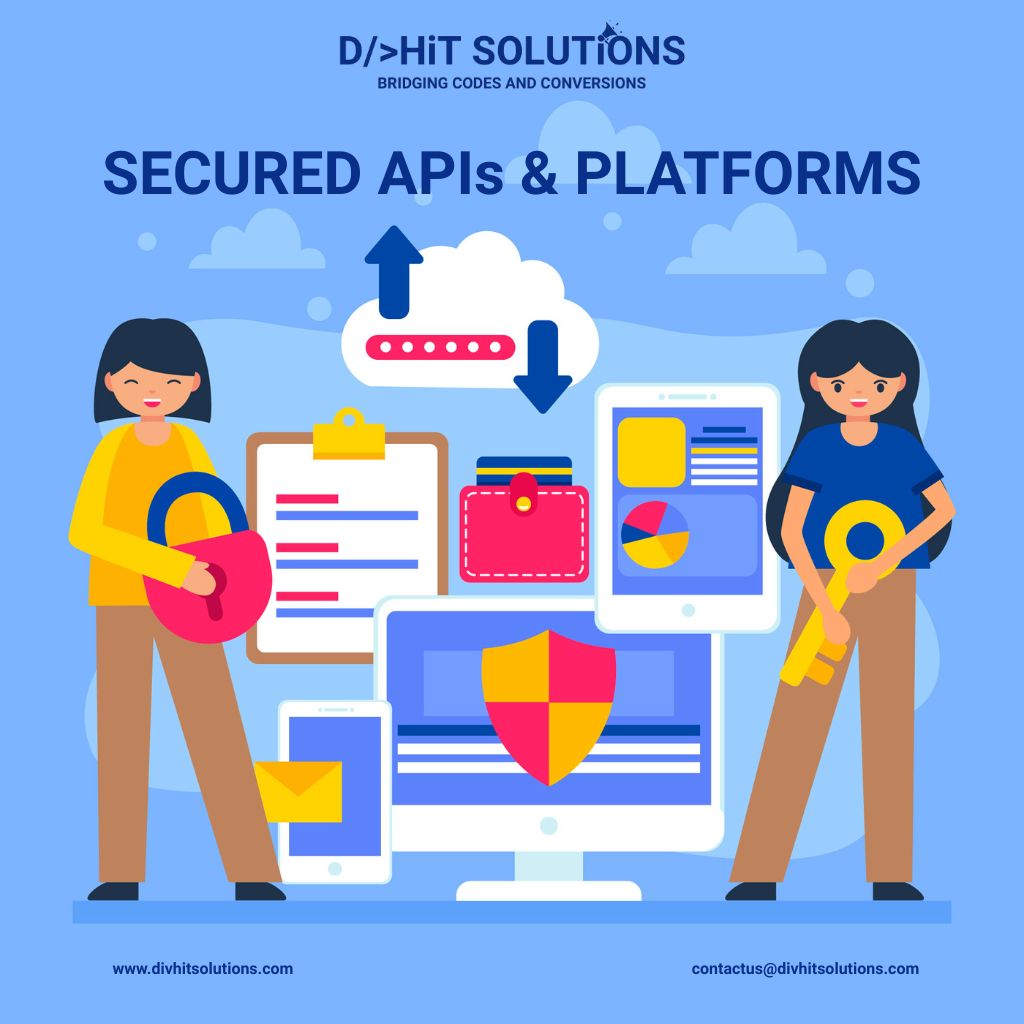
But as these connections grow, so do the risks. Each API opens a new digital doorway—and without the proper security, that door could be wide open to attackers. That’s where secured APIs and platforms come in: they ensure that innovation doesn’t come at the cost of trust or safety. This is where secured APIs and platforms play a critical role in building reliable and protected digital infrastructures.
This guide will explore what secured APIs are, why they matter across industries, and how to implement them effectively using real-world examples and best practices.
What Are Secured APIs?
Secured APIs are APIs that have been designed and implemented with built-in security measures to prevent unauthorized access, data breaches, and misuse. Security can be enforced through:
- Authentication (e.g., OAuth 2.0, API keys)
- Authorization (role-based access control)
- Encryption (TLS/SSL)
- Input validation
- Rate limiting and throttling
These mechanisms ensure that only authorized users and systems can access the API and that data is protected both in transit and at rest.
For more detailed guidance, consult the OWASP API Security Top 10, a globally recognized standard for preventing API threats.
Why API Security Matters for Every Platform
APIs are used in nearly every industry today:
- Finance: Secure APIs enable online banking and payment processing (e.g., Stripe, Plaid)
- Healthcare: Share sensitive patient data under HIPAA compliance (e.g., FHIR APIs)
- Retail: Power eCommerce platforms with inventory and payment integrations
- EdTech: Connect LMS platforms with third-party learning tools
- IoT: Connect smart devices to centralized apps and cloud platforms
If APIs are not adequately secured, the platform risks significant vulnerabilities, including:
- Data leaks
- Identity theft
- Service downtime
- Regulatory non-compliance
To build secure applications tailored to your business, DivHit Solutions offers custom software development that prioritizes security and scalability.
Secured APIs also play a pivotal role in building user trust. In the contemporary digital economy, trust has emerged as one of the most valuable assets that a business can possess. Even a single security incident has the potential to result in significant financial losses and enduring damage to a brand’s reputation. Consequently, an increasing number of organizations are adopting a security-by-design approach, ensuring that the security of application programming interfaces (APIs) is integrated as a fundamental component of development from the outset.
Best Practices for Securing APIs
Regardless of whether one operates a startup or a large enterprise, the following universal best practices should be considered:
- Use HTTPS Everywhere: Secure transport with TLS encryption is non-negotiable.
- Implement Strong Authentication & Authorization:
- OAuth 2.0 for delegated access
- API keys for basic control
- JWT (JSON Web Tokens) for stateless sessions
- Validate All Inputs: Never trust user data unquestioningly. Use strict schemas.
- Rate Limit and Monitor:
- Protect against DDoS and brute-force attacks.
- Log and analyze traffic with API gateways (e.g., Kong, Apigee)
- Keep APIs Versioned and Documented: Avoid breaking changes and improve transparency.
- Utilize API Gateways and WAFs (Web Application Firewalls) to Add layers of protection.
- Conduct Regular Security Audits: Periodically test your APIs for vulnerabilities through automated tools and manual penetration testing.
Real-World Example: Stripe
Stripe is a global payment gateway that provides secure APIs for handling credit card transactions. They enforce:
- TLS 1.2 or above for encryption
- Tokenization for PCI compliance
- Role-based access for developers and admins
Because of its security-first approach, Stripe is trusted by millions of businesses.
Real-World Example: Google Cloud APIs
Google Cloud provides APIs for storage, machine learning, and data analysis. Each API:
- Requires OAuth tokens
- Enforces rate limits
- Offers IAM (Identity and Access Management) integrations
This enables large enterprises to scale securely across multiple teams and use cases.
Google also emphasizes the importance of least-privilege access and secure service-to-service communication, ensuring every service in the ecosystem has exactly the permissions it needs and no more.
Developer Tools for Securing APIs
Several modern tools and platforms can help developers implement and manage secured APIs:
- Postman Security: Assists in testing and automating security policies during development.
- Traceable AI: Offers runtime protection and threat detection for live APIs.
- Tyk: An open-source API gateway with built-in security, analytics, and throttling features.
- AWS API Gateway: Offers built-in support for throttling, authorization, and monitoring.
Leveraging such tools not only enhances security but also ensures faster development cycles and better compliance.
Future Secured API Platforms
With increasing regulatory scrutiny (e.g., GDPR, CCPA) and cyber threats, the future will demand:
- Greater use of AI-based threat detection
- Zero Trust API architectures
- End-to-end API observability
- Decentralized identity models (e.g., DID, verifiable credentials)
- Embedded security in DevOps pipelines (DevSecOps)
The growth of APIs will be closely matched by innovation in API security, ensuring digital ecosystems remain resilient and trustworthy.
Conclusion
Secured APIs and platforms are no longer just a technical necessity — they’re a cornerstone of digital trust. Whether you’re developing a fintech app, launching a healthcare solution, or scaling your online store, prioritizing API security means putting your users and reputation first.
As technology advances and threats become increasingly complex, your security strategy must adapt accordingly. Investing in API security today isn’t just about preventing problems — it’s about building a resilient, future-ready platform that earns customer trust and stands the test of time.
Scalable Solutions for High-Traffic Applications
Scalable Solutions for High-Traffic Applications
The digital world runs on scale. From social media platforms hosting billions of posts to video streaming services delivering terabytes of content per second, every modern application faces the pressure to serve more users, process more data, and do it faster than ever before. At the heart of this ability lies scalability—the capacity of a system to handle growth efficiently and reliably.
In today’s age, whether you’re building a finance app, a video-sharing platform, or a real-time messaging system, your infrastructure must be able to scale seamlessly. If not, performance bottlenecks, outages, and lost revenue are inevitable.
Let’s explore what scalable solutions mean, why they’re critical for large-scale platforms, and how to implement them effectively.
What Are Scalable Solutions?
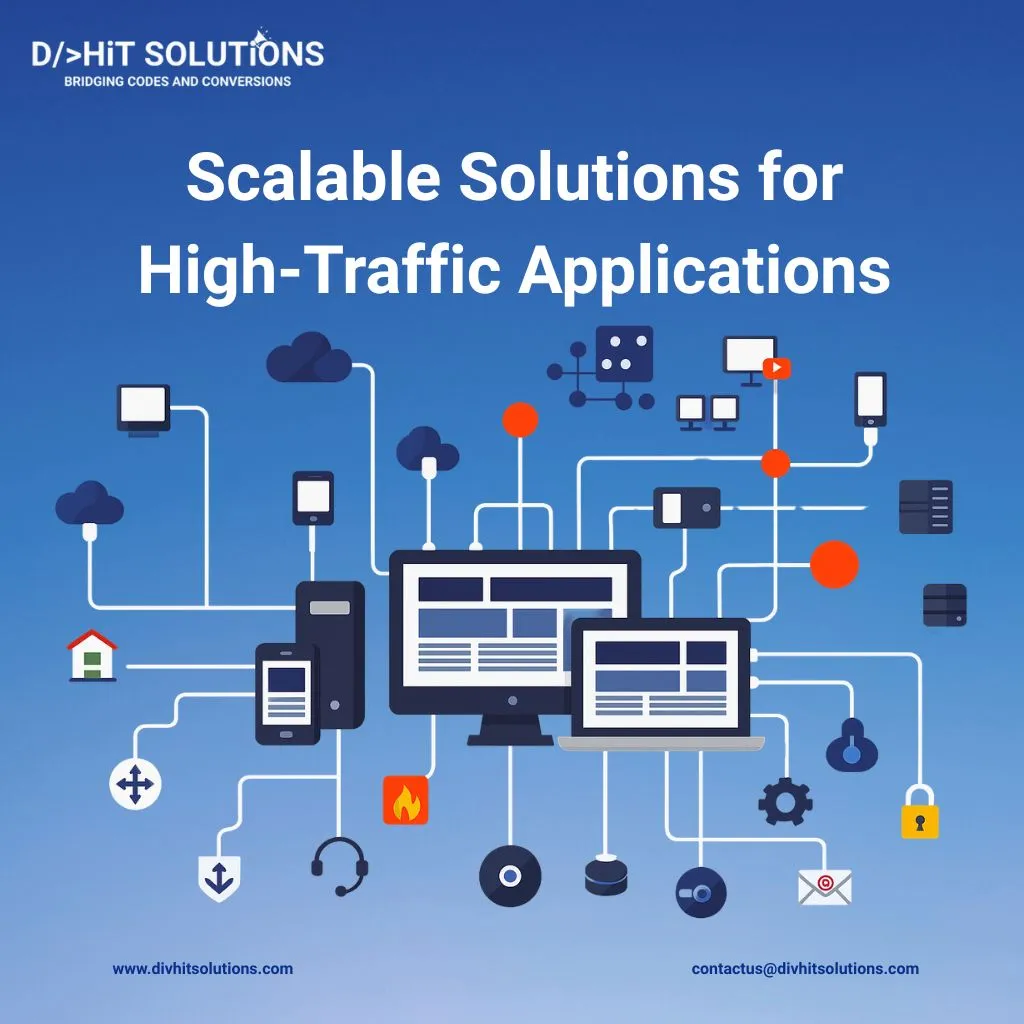
Scalable solutions are systems or architectures that can efficiently grow in capacity and performance to meet increasing workloads, users, or transactions—without a linear increase in cost or complexity.
They are essential for industries such as:
- Social Media – managing billions of posts, reactions, and real-time notifications
- Streaming Platforms – serving video/audio content in real-time across geographies
- E-commerce – handling flash sales, checkouts, and customer data simultaneously
- Finance & FinTech – processing secure, real-time transactions with compliance
Why Scalability Is No Longer Optional
- Exponential Growth in Data & Users
- Facebook produces more than 4 petabytes of data every day.
- Netflix streams more than 500 million hours of video daily.
- Payment systems like UPI in India now handle 10+ billion transactions monthly.
- Unpredictable Traffic Spikes
- Flash sales, viral trends, or market volatility can all cause traffic surges. Scalability ensures systems don’t crash during peak loads.
- Global User Base Demands
- Serve users across time zones and network conditions with global infrastructure and content delivery.
- Cost Optimization
- Elastic systems scale up and down automatically, reducing overhead and maximizing efficiency.
Characteristics of Truly Scalable Systems
- Horizontal Scalability – Add more servers to share the load
- Modularity – Services can scale independently
- Elastic Infrastructure – Resources scale with demand
- Stateless Services – Easy replication and load balancing
- Asynchronous Processing – Queue-based architecture for decoupled load handling
Technologies Powering Scalable Solutions
1. Cloud-Native Infrastructure
Cloud platforms, such as AWS, Azure, and Google Cloud, offer autoscaling, managed services, and multi-region deployments.
2. Microservices Architecture
Independent services communicate via APIs and scale separately, improving resilience and performance.
3. Streaming & Queuing Systems
Kafka, Redis Streams, and RabbitMQ decouple producer and consumer workloads, handling millions of events per second.
4. Edge Computing & CDNs
Content delivery networks like Cloudflare and Akamai serve static and dynamic content closer to users.
5. Serverless Functions
Execute code on demand with zero server management using AWS Lambda or Google Cloud Functions.
Best Practices for Building Scalable Applications
- Design for Failure: Implement redundancy, retries, and failover mechanisms to ensure system resilience and reliability.
- Use Asynchronous Communication: Decouple services with messaging queues.
- Prioritize Observability: Use Prometheus, Grafana, or Datadog for monitoring.
- Database Partitioning: Shard and partition data to prevent contention.
- Leverage Caching: Reduce latency with Redis, Memcached, and edge caching.
Real-World Examples of Scalability
- Twitter: Migrated to microservices using Scala and Apache Mesos to handle 500M+ tweets daily.
- Spotify: Uses Kubernetes, modular services, and streaming pipelines for over 515M monthly users.
- Amazon handles tens of thousands of orders per minute via a decoupled, distributed architecture.
Common Scaling Pitfalls to Avoid
- Overengineering Early: Start simple and scale only when necessary.
- Ignoring Data Consistency: Choose the right consistency model for your use case.
- Operational Overhead: Automate infrastructure and deployment with IaC tools like Terraform.
The Cost of Not Scaling
- Downtime Losses: Average downtime costs $5,600 per minute (Gartner)
- Conversion Drops: A 100ms delay can reduce conversions by 7% (Google)
- User Churn: Poor performance leads to negative reviews and loss of trust
Final Thoughts: Scale Is a Competitive Advantage
Scalability is no longer a technical luxury; it is a necessity. It’s a strategic requirement for any business expecting growth, high traffic, or rapid user adoption. By adopting scalable architectures, leveraging modern cloud platforms, and building modular systems, organizations can thrive under pressure and outperform competitors.
Whether you’re scaling a startup or evolving a legacy platform, building for scale is building for success.
At DivHit Solutions, we specialize in architecting scalable, high-performance systems tailored to your industry—whether you’re running a fast-growing e-commerce platform, a real-time streaming service, or a data-heavy FinTech application. From designing cloud-native microservices to implementing auto-scaling infrastructure and load balancing, our team ensures your platform grows seamlessly without compromising speed, security, or reliability.
Partner with us to future-proof your digital ecosystem.
Why Small Businesses Need Custom Software Solutions
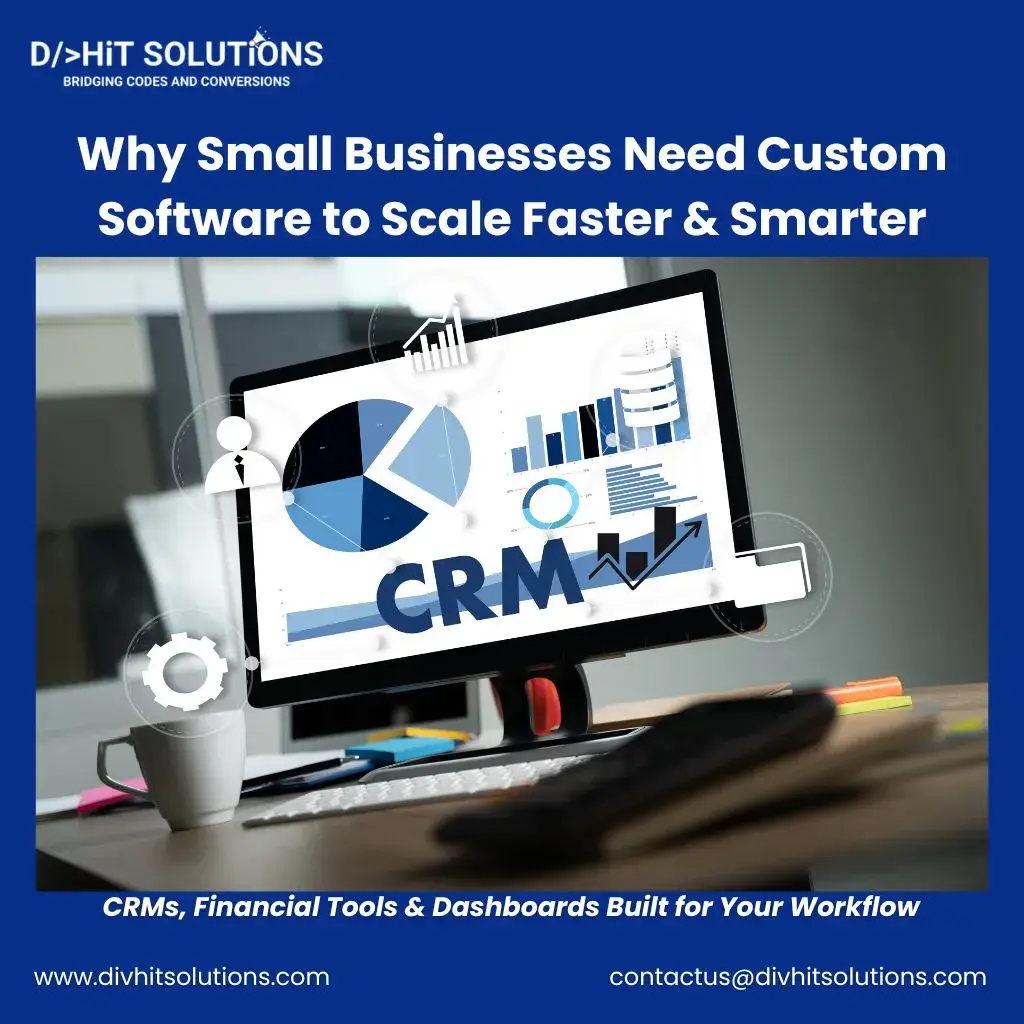
Why Small Businesses Need Custom Software to Scale Faster and Smarter
Running a small business today isn’t easy. Between managing clients, tracking finances, staying on top of team performance, and adapting to a fast-changing market — it’s a lot to juggle. That’s why more small businesses are turning to custom software solutions to get organized, scale efficiently, and boost revenue.
Let’s explore how investing in tailored tools, such as custom CRMs, financial tracking software, and performance dashboards, can give your business the edge it needs to grow — without burning out you or your team.
Top 10 Reasons Small Businesses Need Custom Software in 2025
In 2025, small businesses will face a rapidly changing market. Customers want smooth digital experiences, and many teams work remotely or in hybrid settings. Automation is essential, not optional. Custom software helps small businesses stay flexible and accurate to meet these new demands.
Here are the top 10 reasons why investing in tailored tech solutions is no longer optional — it’s essential:
Tailored to Your Workflow:
No more forcing your business into someone else’s mould — every feature is built around your exact process.Fewer Monthly Subscriptions:
Reduce the tech stack overload. A well-designed custom tool can replace 3–5 SaaS products you’re currently paying for.Real-Time Business Insights:
Get dashboards and reports that reflect what matters to your business, not just vanity metrics.Seamless Integration:
Custom software can seamlessly integrate your website, CRM, accounting, and marketing tools, eliminating the need for fragile third-party APIs.Boosted Productivity:
Teams spend less time switching tools and more time doing what matters — serving clients and closing deals.Better Lead Conversion:
With a custom CRM, you can track, nurture, and close leads more efficiently with automated reminders and personalized funnels.Improved Customer Experience:
From automated invoicing to faster onboarding, your clients get a smoother experience — and they notice.Scalability Without Chaos:
As your business grows, your software grows with you. Add features, expand users, tweak logic — no need to “switch platforms.”Data Ownership and Security:
You control your data and your rules: no vendor lock-in, no surprise policy changes.Competitive Advantage:
While others are stuck using generic tools, you’re running lean, automated, and insight-driven. That’s how you outpace bigger players.
Let's Dig Deeper: How These Tools Create Real Impact
Now that we’ve explored the broader reasons let’s dive into specific examples of how different types of custom software — such as CRMs, financial systems, and team dashboards — directly support your small business goals.
1. One-Size-Fits-All Doesn’t Work Anymore
Off-the-shelf tools can be great when you’re just starting. But as your business evolves, generic platforms often create more problems than they solve:
- Too many features you never use
- Not enough flexibility
- Poor integration with your workflows
With custom software for small businesses, every feature is designed around your exact needs — not someone else’s template.
Imagine a CRM that only tracks your sales pipeline stages or a finance dashboard that gives you the metrics you care about most.
2. Custom CRMs Help You Close More Deals
Your customer relationships are everything. But if you’re still tracking leads in spreadsheets or hopping between tools, you’re losing time — and likely sales.
A custom CRM (Customer Relationship Management system) can help you:
- Automate follow-ups and reminders
- Track lead status in real-time
- Get insights into what’s working (and what’s not)
- Integrate directly with your website or booking system
The result? Better lead conversion, less admin work, and a more consistent sales process.
👉 Learn how a custom CRM outperforms generic tools
3. Financial Software That Makes Sense
Most small business owners don’t have time to become accounting pros — nor should they have to.
Instead of adapting to a bloated platform, why not build a simple, custom finance tracking system that:
- Record income/expenses the way you categorize them
- Sends you alerts when costs spike
- Shows profit margins for each service or product
Custom financial tools can also sync with your invoicing, payroll, or banking systems, saving hours every month.
👉 Xero’s guide to customizing financial workflows
4. Team Performance Tracking = Growth
If you have a growing team — even one of just 3 or 4 members — tracking how everyone is performing becomes critical.
Custom dashboards can help you:
- Visualize project progress
- Track time spent per task or client
- Spot bottlenecks before they become problems
This isn’t about micromanagement. It’s about ensuring your resources are aligned with your goals — and identifying growth opportunities early.
👉 See how small teams use dashboards for productivity
5. You Save Time, Money & Mental Load
At first glance, custom software might feel like a luxury. But in reality, it can help you cut waste and improve ROI in just months:
- Fewer subscriptions
- Less time wasted switching tools
- Reduced errors and miscommunication
- Easier onboarding for new hires
And since the software is yours, you can update, tweak, or scale it as needed — no more waiting for feature requests or dealing with bloated interfaces.
6. Real-Life Impact: Small Business Wins
Let’s say you run any education business. A custom software suite could:
- Auto-register students and assign them to courses
- Track fees, pending payments, and invoices
- Monitor ad campaign ROI and enrollment rates
- Integrate with your website’s lead forms
That’s not a dream — we’ve built solutions like this for real clients.
7. When to Invest in Custom Software
You’re ready if:
- You’re juggling multiple tools that don’t talk to each other
- You’re spending too much time on admin tasks
- You can’t track performance metrics clearly
- You’ve outgrown your current software stack
Custom doesn’t mean complicated. It means efficient, tailored, and aligned with your vision.
Final Thoughts: Start Small, Build Smart
You don’t need a massive system to start. Many small businesses build their software in phases:
- Start with a CRM or financial tracker
- Add team dashboards later
- Eventually, build a full business ops suite
At DivHit Solutions, we help small businesses build powerful, lean, and cost-effective custom software tools that truly fit their needs.
Want to explore what custom software could look like for your business?
Schedule a free consult, and let’s map it out together.
Boost Enrollments: Position Your Private College for Maximum Leads
Boost Enrollments: Position Your Private College for Maximum Leads
In today’s rapidly evolving educational landscape, private colleges across Canada are facing pressure. With big-name institutions dominating attention and digital ads becoming increasingly expensive, it’s challenging to stand out—especially if your marketing efforts feel outdated or unclear. However, there is one significant advantage that private colleges can tap into right now: strategic market positioning.

What Does Market Positioning Mean for Private Colleges?
Simply put, market positioning refers to how students perceive your college about others. It’s the message that defines:
- Who you’re helping (e.g., newcomers, creatives, career changers)
- What you’re offering (hands-on training, small classes, fast-track options)
- Why it matters (real outcomes, local relevance, career support)
If you don’t define your message, others will—and you risk blending into the crowd.
Why Market Positioning Is the Key to More Leads & Enrollments
Many private colleges lean on word-of-mouth or seasonal youth camp promotions. Others rely heavily on education agents. While these may bring some traffic, they rarely build lasting brand presence.
Here’s why precise positioning improves your lead generation:
1. You Attract the Right Students
Your messaging should speak directly to people actively searching for what you offer. For example, a healthcare worker looking to upskill in medical office administration or a construction worker seeking AutoCAD certification won’t connect with vague, general messaging.
2. You Build Instant Trust
According to Edelman’s Trust Barometer, people trust institutions that clearly define their identity and values. A clearly positioned college website featuring testimonials and student outcomes makes prospects feel confident enough to apply.
3. You Lower Your Advertising Costs
When your ad copy resonates both emotionally and logically, people are more likely to click on it. Higher CTRs = lower CPCs. That means your ad spend works harder for you.
4. You Convert More Website Visitors
When a visitor lands on your page, they shouldn’t feel lost. A well-positioned college site guides them to take action—whether it’s booking a tour or applying for a course.
How to Strengthen Your Positioning and Get More Leads
Let’s break it down into actions you can take:
1. Know Who You’re Talking To
Who are your best-fit students?
- Are recent immigrants looking to upskill?
- Adults seeking flexible second-career programs?
- Local youth exploring creative or technical trades?
Your message should mirror their goals and pain points.
2. Make Your Website Do the Heavy Lifting
Your site should:
- Highlight what makes you unique (e.g., accelerated formats, local job relevance, supportive instructors)
- Load quickly and work well on mobile (Test it here)
- Include CTAs like “Enroll Now,” “Download Program Guide,“ or “Book Your Free Consultation”
3. Create Landing Pages for Each Program
Generic homepages are conversion killers. Use specific pages for programs like:
- Medical Office Assistant
- Nail & Brow Extensions
- AutoCAD & Drafting
- Graphic Design Tools like Adobe Illustrator
- Accounting & Payroll
Each page should answer: what’s in it for the student?
4. Run Smart PPC Ads with Local Targeting
Use targeted search and social campaigns with keywords like:
- “Healthcare Certificate Program Canada”
- “AutoCAD course Vancouver”
- “short job-ready diploma Canada”
Additionally, retarget individuals who visited your site but didn’t complete the form.
5. Use Data to Optimize
Install Google Tag Manager and track:
- Button clicks
- Form submissions
- Scroll depth
This shows you what’s working—and what’s not.
What DivHit Solutions Can Do for You
At DivHit Solutions, we specialize in helping private colleges across Canada transition from being overlooked to being overbooked. Whether you’re running in-person batches in Vancouver or online cohorts nationwide, we craft strategies that motivate people to take action.
Here’s what we offer:
- 🎯 Program-Specific Funnels: Each course is assigned a dedicated landing page and lead journey.
- 💻 Website Optimization: Fast, mobile-friendly, and designed to convert.
- 📢 PPC Campaigns: Google and Meta ads that bring real results—not just clicks.
- 🔍 SEO & Blog Content: Build visibility with content that attracts and educates.
- 🔄 Automation Setup: Email + WhatsApp follow-ups to convert browsers into buyers.
- 🎥 Student Testimonials & Class Videos: Show, don’t tell—real experiences build trust fast.
We don’t believe in templates. Your brand is unique, so our strategy is, too. We’ll dig into your goals, audience, and programs, then build a plan that fills your seats.
Let’s Make Your College Stand Out
Private colleges in Canada have so much to offer—but it’s time to make that known. The proper positioning, paired with an innovative digital strategy, can help you:
- Reach more of your ideal students
- Boost enrollments for both part-time & intensive programs
- Grow sustainably—without relying only on seasonal demand or third-party agents
🔗 Book a Free Strategy Call with DivHit Solutions and start building a lead generation engine that works.
How custom SEO strategies boost ROI
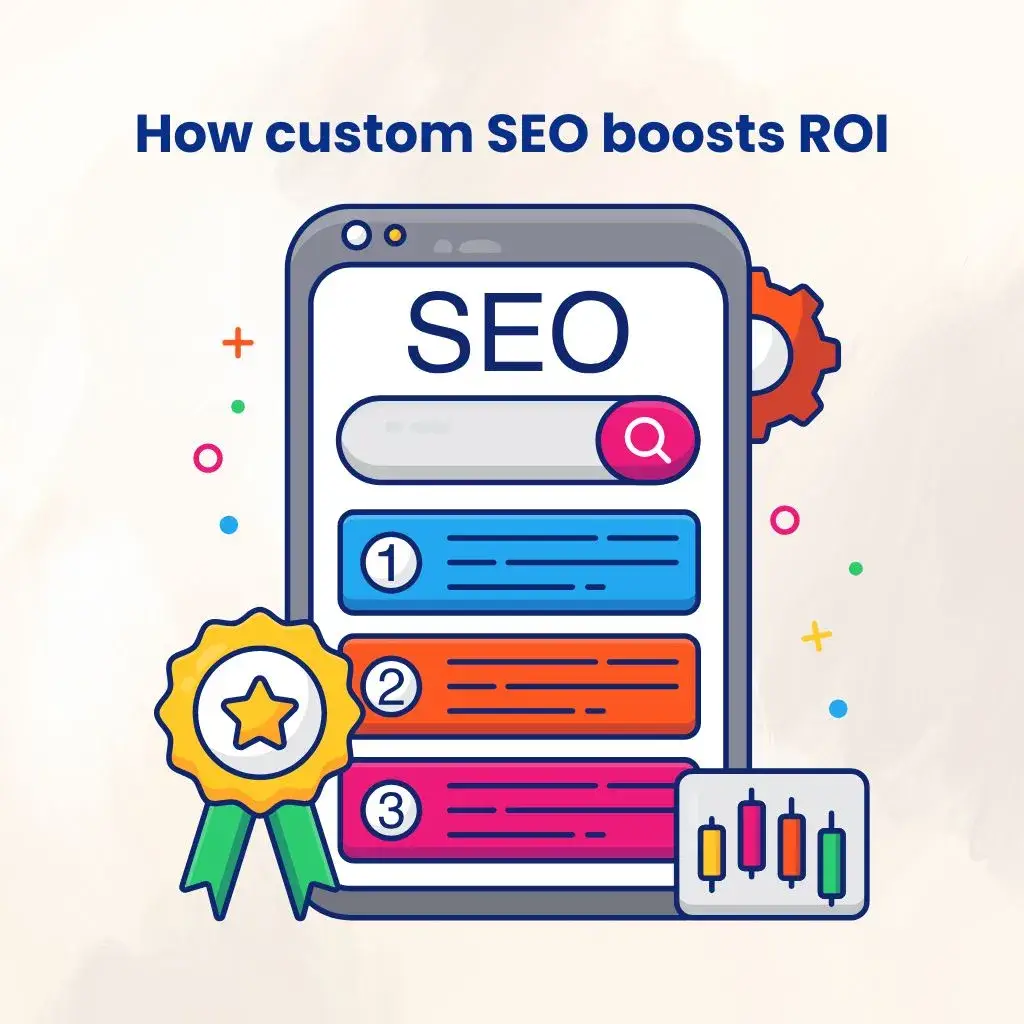
How Tailored SEO Approaches Enhance Your Business's ROI?
Today’s solutions often fail to produce lasting results. Although simple keyword stuffing and cookie-cutter content might create short-term increases in traffic, they seldom lead to significant conversions or sustained growth. This is where tailored SEO strategies prove their value.
Custom SEO isn’t about following a one-size-fits-all cisn’tist. It’s about designing a search engine optimization approach tailored to your industry, business goals, and target audience. And when done right, it becomes one of the most cost-effective digital marketing strategies with measurable return on investment (ROI).
Why One-Size-Fits-All SEO Fails
Most businesses have unique customer journeys, products, and positioning. Off-the-shelf SEO tactics don’t consider the nuances of your:
- Business model (eCommerce vs. service-based)
- Geographic reach (local, national, international)
- Competition level
- Conversion goals
As a result, you may rank for keywords that bring in traffic but don’t convert. Worse, you might waste your dotting budget targeting irrelevant audiences.
What Makes Custom SEO Different?
Customized SEO strategies are grounded in thorough research and ongoing optimization. Here’s what sets them apart:
- In-Depth KeywoHere’search: Focuses on long-tail keywords, local phrases, and buyer intent-specific queries that your actual customers are searching for.
- Tailored On-Page SEO: Each page is optimized according to its specific role in your sales funnel, whether it serves an educational, transactional, or navigational purpose.
- Content That Converts: Instead of generic blogs, craft content to match your brand tone, educate prospects, and guide them toward action. At DivHit Solutions, we create SEO-optimized content frameworks to enhance engagement.
- Technical SEO Optimization: Page speed, mobile responsiveness, structured data, crawl budget – everything is fine-tuned based on your site’s architecture and goals.
- Data-driven requirements: Continuous tracking using tools like Google Analytics, Search Console, and heatmaps to refine what’s working and eliminate what’s not.
- Lowhat’s Enhancements: For location-based businesses, custom strategies include optimizing Google Business Profile, managing citations, and targeting hyperlocal keywords.
How Custom SEO Directly Impacts ROI
Higher Conversion Rates
Custom SEO attracts users who are more likely to convert because it aligns your website content with their search intent. You gain qualified traffic that takes action, not just random visits.
Reduced Customer Acquisition Cost (CAC)
A well-optimized site with a strong organic presence reduces your dependency on paid ads. Over time, organic leads cost far less than paid ones, significantly improving your marketing ROI.
Improved Customer Lifetime Value (CLTV)
There is much more to SEO than just acquiring; it is about crafting customized strategies that resonate with your target audience. Enhancing engagement and loyalty can be achieved through content that simultaneously captures customers and builds connections. As a result, your customer relationships will be more valuable in the long run.
Stronger Competitive Advantage
Custom SEO strategies help you achieve higher rankings for specific relevant keywords by addressing the unique needs of your business and target audience. Your brand’s unique characteristics and your customers’ interests enable you to develop content that resonates more effectively with your audience through personalized SEO. In addition to improving your visibility in search engine results, this approach also positions you ahead of competitors who use generic, one-size-fits-all SEO techniques that are not as effective in attracting potential customers. Through this strategy, organic traffic increases, engagement improves, and conversions increase.
Growth That Can Expand Over Time
The benefits of customized SEO can extend over the long term for your business by establishing a valuable online presence. Unlike paid media, which stops generating traffic and leads the moment you stop spending, optimized content will continue to bring in long-term traffic and leads for months or years after you stop paying.
Real-World Example
A Vancouver-based training institute offering hybrid creative courses partnered with DivHit Solutions for a custom SEO strategy. By identifying local search patterns, creating geo-optimized landing pages, and building relevant backlinks, they saw:
- 4x increase in organic traffic within 6 months
- 78% boost in form submissions
- 39% decrease in paid ad spending isn’t proven lead quality
Steps to It's Your Custom SEO Strategy.
- Start with a Comprehensive Audit. Identify technical issues, keyword gaps, and underperforming content to optimize your online presence and improve your online visibility.
- Define Clear Goals and Align SEO with business KPIs, such as lead generation, sign-ups, or online sales.
- Segment Your Audience: Build personas and map their search behaviour.
- Create a Content Plan Develop blog posts, landing pages, and service pages based on funnel stage and keyword intent.
- Optimize the Technical Backend to Ensure fast load times, mobile responsiveness, and indexability.
- Track and Iterate: Utilize dashboards and monthly reports to analyze progress and make adjustments as needed.
Ready to Maximize ROI with SEO?
If your current strategy isn’t yielding measurable results, it’s time for a customized approach. At DivHit Solutions, we design SEO strategies built around your business objectives. From local SEO to enterprise-level campaigns, we help brands generate more leads, reduce acquisition costs, and drive sustainable growth.
Let us turn your SEO into a profit-generating engine. Book a free SEO consultation today.