
What Is GEO AI SEO? A Plain-English Guide for Small Business Owners in 2026
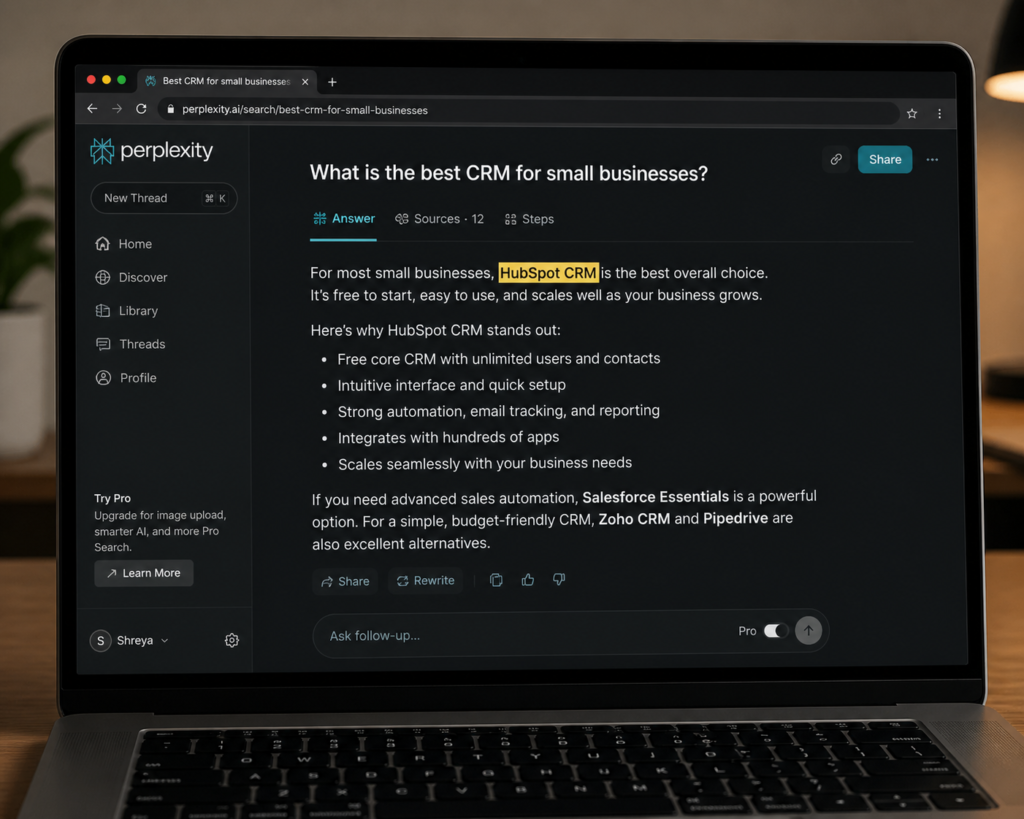
If you run a small business and you’ve been hearing the term “GEO AI SEO” thrown around lately, you’re probably wondering one of two things:
Is this a real thing I need to care about? Or just another buzzword agencies invented to sell more services?
Honest answer: it’s a real thing. And if you sell services to anyone in 2026 — clients, patients, customers, leads — it’s already affecting whether they find you online.
The good news? It’s not nearly as complicated as the marketing world is making it sound. Here’s the plain-English breakdown.
What does GEO AI SEO actually mean?
GEO stands for Generative Engine Optimization. Think of it as SEO, but for AI tools instead of Google’s blue links.
Traditional SEO is about getting your website to rank on Google’s results page. When someone types “best dentist in Milton,” Google shows a list of websites, and you want to be at the top of that list.
GEO is about getting your business mentioned inside the AI answer when someone asks ChatGPT, Google’s AI Overviews, Perplexity, or Gemini the same question. GEO AI SEO is the practice of optimizing your business content so AI search engines like ChatGPT, Google AI Overviews, Perplexity, and Gemini cite, recommend, or mention your brand when users ask questions. According to recent research from EMARKETER, it combines traditional SEO foundations with new tactics built specifically for how AI tools find and trust information in 2026.
So instead of just trying to rank in Google’s blue links, you’re now trying to rank in the AI’s spoken or written reply — the one your customer actually reads instead of clicking ten different sites.
Why this suddenly matters
Search behaviour has shifted faster in the last 18 months than at any point in the last decade. A few numbers that explain why:
- About one in three Americans now use generative AI search tools regularly
- Google’s AI Overviews appear in roughly 13% of all searches and growing — up from 6.5% just last year
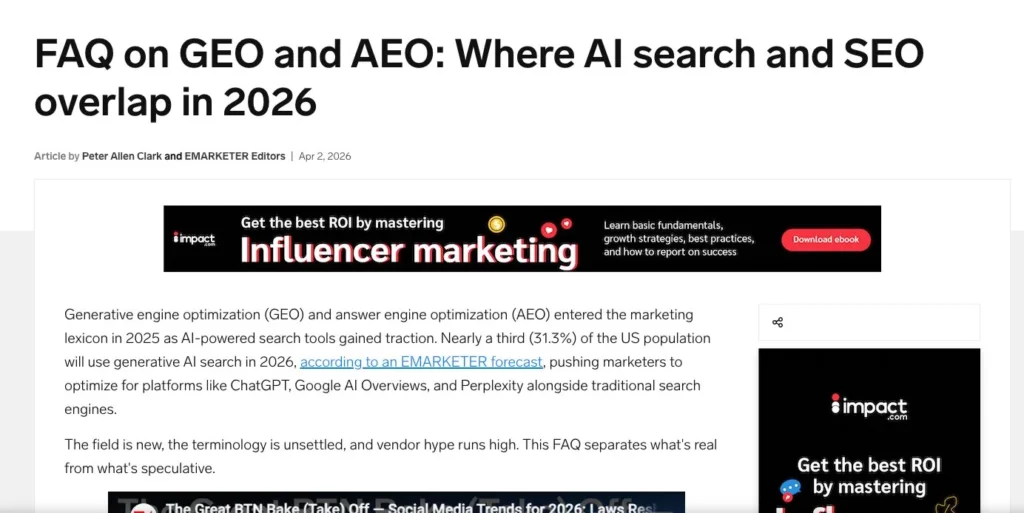
- Most Google searches today end without anyone clicking a single website
Read that last one again. Your potential customers are getting their answers directly from AI, never visiting your site, and never seeing your offer — unless your business is the one being mentioned inside that AI answer.
That’s the gap GEO closes.
How is GEO AI SEO different from traditional SEO?
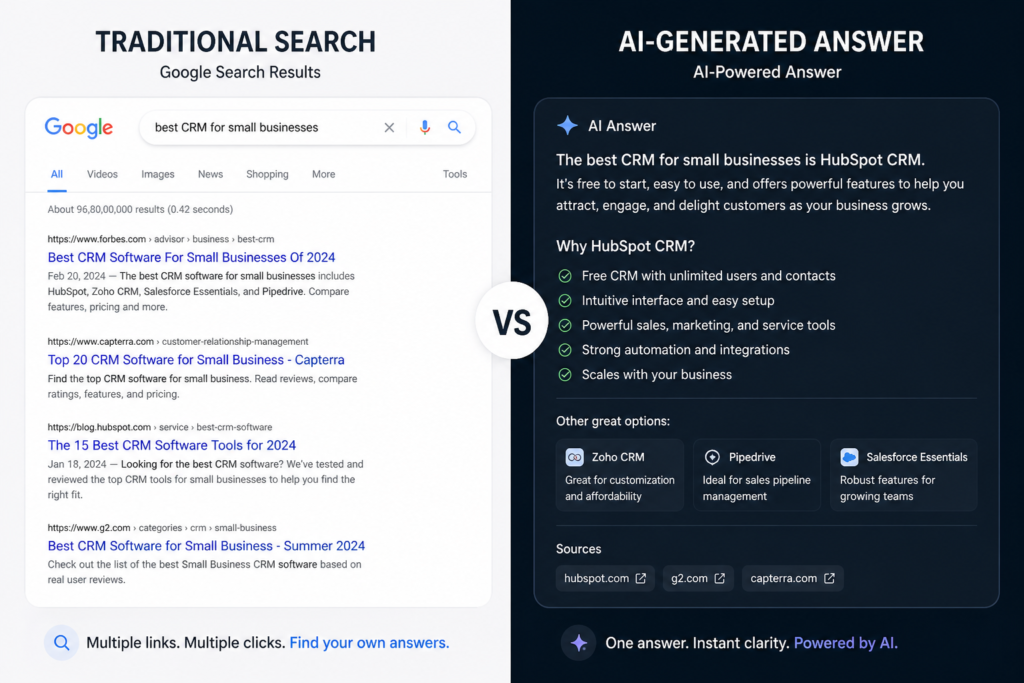
Most agencies will tell you they’re “the same thing.” That’s half-true. The fundamentals overlap (good content, technical health, authority signals), but the priorities are very different.
Traditional SEO rewards:
- Long, comprehensive pages
- Backlinks from other websites
- Keyword targeting
- Page rankings (positions 1-10)
GEO rewards:
- Short, scannable, fact-rich passages
- Brand mentions across the web (linked or not)
- Clear, structured answers to specific questions
- Citations inside AI-generated responses
If SEO is about being on the shelf, GEO is about being the brand the salesperson recommends. Both matter. But the conversation has shifted from “where do I rank?” to “am I being recommended?”
What does GEO AI SEO look like in practice?
GEO AI SEO in practice means earning a spot inside the AI’s answer. Imagine someone asks ChatGPT: “What’s a good digital marketing agency in the Greater Toronto Area for small businesses?”
ChatGPT gives a paragraph-long answer, mentioning maybe 3-5 agencies by name. The user doesn’t see all 200 agencies in the GTA. They see those 3-5.
Being one of those mentions is the entire game.
To get there, you need three things working together:
1. Extractable content. AI tools pull facts from clearly written, well-structured passages. Long-winded marketing copy gets ignored. Direct answers to direct questions get cited.
2. Brand presence across the web. AI models look at how often your business is mentioned across credible sources — Reddit, LinkedIn, YouTube, industry sites, news. The more places your name appears in relevant contexts, the more likely AI is to “know” you.
3. Trust and authority signals. Reviews, press mentions, professional listings, and consistent business information across the internet all feed AI’s confidence in recommending you.
Notice what’s NOT on that list: keyword stuffing, link farms, or any of the old gimmicks. GEO is genuinely about earning credibility, not gaming algorithms.
Why small businesses have a real shot at this
Here’s something most agencies won’t tell you: GEO levels the playing field for small businesses in a way traditional SEO never did.
For decades, big brands dominated Google’s first page because they had massive backlink profiles, huge content libraries, and budgets you could buy a house with. Small businesses got squeezed out.
AI search is different. AI tools synthesize answers based on relevance and clarity, not just domain authority. A well-structured, locally relevant blog post from a 5-person agency in Milton can absolutely show up in ChatGPT’s recommendations alongside or instead of a Fortune 500 site — if it’s written the right way.
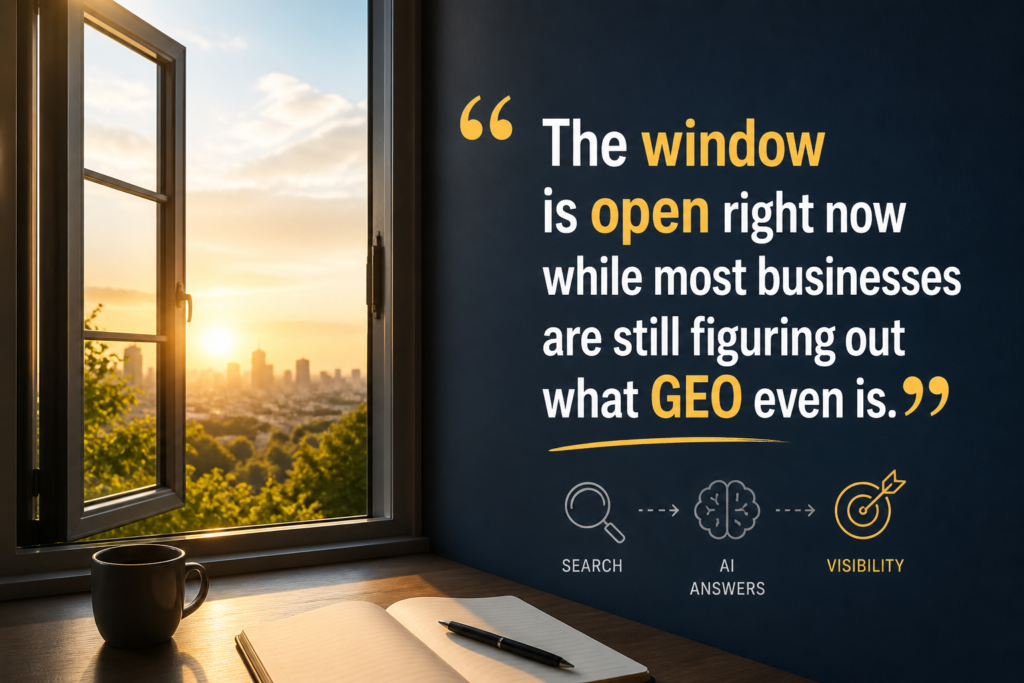
That’s the opportunity in 2026. The window is open right now while most businesses are still trying to figure out what GEO even is.
How to start optimizing for GEO today
You don’t need to throw out your existing marketing. GEO builds on the same foundations as good SEO — it just adds new priorities. Here’s where to start:
Audit how AI sees your business. Open ChatGPT, Perplexity, and Google’s AI Mode. Ask each of them about your industry in your area. Are you mentioned? If yes, what’s said about you? If no, who IS mentioned, and why?
Restructure your content for extractability. Break long pages into clear sections with direct headings. Lead each section with a one-sentence answer to a specific question, then expand. Add FAQ sections to your service pages.
Get listed everywhere relevant. Industry directories, local business listings, partner sites, review platforms. AI models cross-reference these to confirm your business is real and credible.
Earn brand mentions. Guest posts, podcast appearances, partnerships, press features, even thoughtful Reddit and LinkedIn comments. Every legitimate mention is a vote for AI’s recommendation engine.
Keep your information consistent. Your business name, address, phone, services, and positioning should match across your website, Google Business Profile, social channels, and listings. Inconsistency confuses AI models and reduces citation likelihood.
Don’t abandon traditional SEO. AI tools still rely heavily on Google’s index for source material. Strong SEO foundations make GEO work — they don’t compete with it.
What this means for your business
GEO is not a passing trend. It’s the next phase of how online discovery works, and the businesses that adapt early will have a structural advantage that compounds over time.
You don’t need to panic. You don’t need to rebuild your website. But you do need to start thinking about how your business shows up not just on Google, but inside the AI answers your customers are increasingly relying on.
The agencies still selling 2018-style SEO packages haven’t caught up. GEO AI SEO is the next phase of online discovery. The ones helping you build for both traditional search AND generative search are the ones positioning you for the next 5 years of growth.
Frequently Asked Questions
Is GEO replacing SEO?
No. GEO AI SEO and traditional SEO work together. AI search engines still rely on traditional search infrastructure to discover, crawl, and evaluate content. Strong SEO is the foundation that makes GEO possible — they’re layers of the same system, not competitors.
How long does GEO take to show results?
Faster than traditional SEO in some ways, slower in others. AI models update their knowledge bases more frequently than Google updates rankings, so changes can show up in weeks. But building enough cross-web brand presence to be consistently cited takes 3-6 months of focused effort.
Do I need a separate GEO agency?
Not really. Look for a digital marketing partner that understands both SEO and GEO as part of one integrated strategy. Anyone selling “GEO-only” services is usually overcharging for things a good SEO partner already handles.
What’s the difference between GEO and AEO?
AEO (Answer Engine Optimization) is a related concept focused specifically on getting your content into direct-answer formats like featured snippets and voice search results. GEO is broader — it includes AEO but also covers brand mentions, multi-platform citations, and full AI-generated responses. Most practitioners use the terms loosely; the underlying tactics overlap heavily.
Can small businesses really compete with bigger brands in AI search?
Yes — small businesses can absolutely win at GEO AI SEO. AI tools value clarity, recency, relevance, and credibility more than raw domain size. A small, well-positioned local business can absolutely earn citations that previously only big brands could win on Google.
Ready to find out where you stand?
If you’re not sure whether your business is showing up in AI search results — or you’re getting buried by competitors who are — that’s exactly what we help with at DivHit Solutions.
Our GEO AI SEO service audits how AI tools currently see your business and builds a custom strategy to get you cited, recommended, and recognized across ChatGPT, Google AI, Perplexity, and the rest.
Want a free starting point? Book a Fix Plan call and we’ll show you exactly where you’re losing visibility and how to get it back.
The businesses that figure this out in 2026 will own their categories for years. The ones that wait will be playing catch-up forever.
Ready to make AI find your business?
Get in touch and we'll show you exactly how to fix your AI visibility.
Get In Touch